Sounding Freedom – Avant-Garde Jazz in Cold War Hungary as Cultural Resistance
Fellowship program: Visegrad Scholarship at OSA
https://archivum.org/academics/fellows/jasna-jovicevic
This research project examined the development of avant-garde jazz in 1960s Hungary in comparison with mainstream jazz in Yugoslavia, situating both within their respective socio-political, cultural, and artistic contexts. Drawing on archival materials from OSA Blinken Archivum, ethnographic interviews, attendance at concerts by musicians active since the 1970s, and secondary sources, the study investigates how musicians navigated cultural policies, censorship, and ideological framing. In Hungary, avant-garde jazz emerged as a small but artistically significant movement shaped by political narratives and the pursuit of new artistic forms. In Yugoslavia, jazz was embraced as a symbol of cosmopolitan modernity but remained predominantly mainstream. The findings highlight how Cold War cultural policies and differing political frameworks influenced each country’s jazz culture. This report summarises the key findings and will serve as the foundation for a forthcoming scholarly article.
This study adopts a dual vantage point. First, as an anthropologist, I examine the socio-political dimensions of the genre’s development. Second, as a saxophonist–composer active in both free/avant-garde and mainstream idioms, I draw on embodied performance knowledge to offer an insider analysis that accesses tacit conventions and evaluative criteria often absent from archives or policy texts. A further ambivalence follows from my professional trajectory: I was trained at the Liszt Ferenc Academy of Music, Jazz Department, in Budapest, where I lived and worked as a musician for twelve years; for the past fifteen years I have lived and worked in Serbia. This positionality enables a holistic and transdisciplinary analysis of the topic. The results of the research will be published.
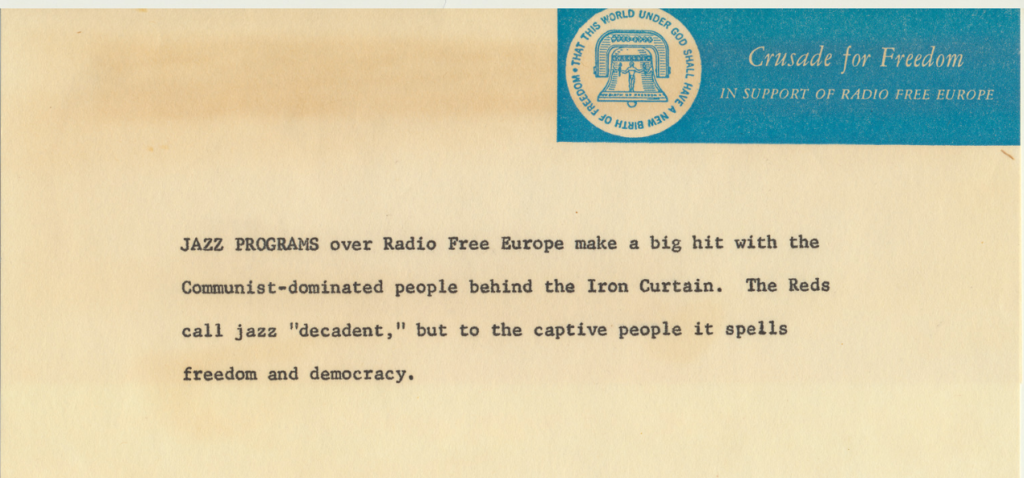
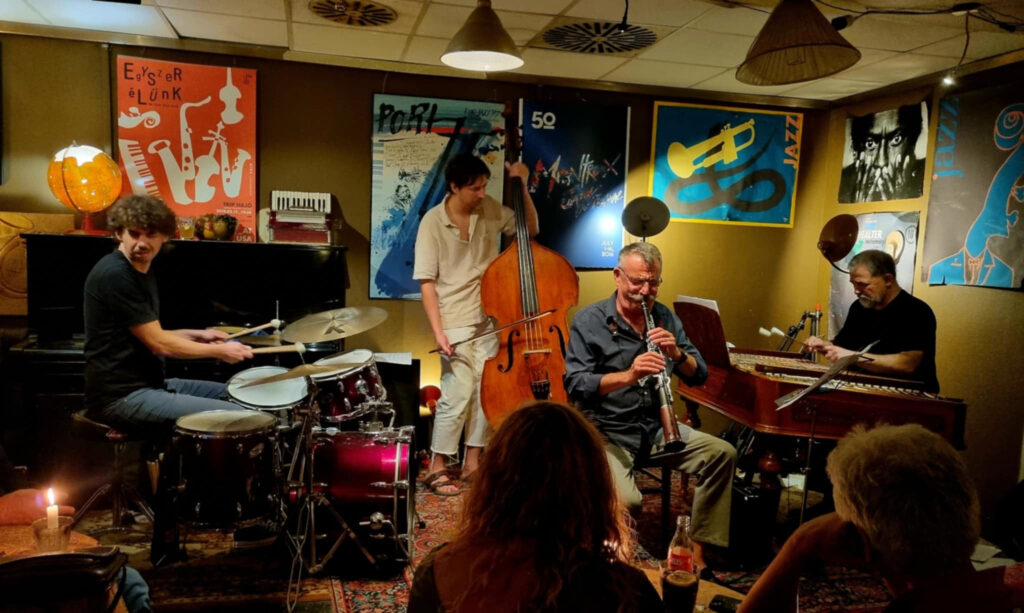
Primary sources included materials from HU OSA 300-80-1:574, HU OSA 300-40-1:1597, HU OSA 300-10-3:39, HU OSA 300-10-3:14, HU OSA 300-40-5 box 25, HU OSA 300-1-2 reference files (76/113, 67/595, 4/1604, 61/27, 2/2348), HU OSA 300-60-1 box 806, HU OSA 300-120-5:205, HU OSA 300-40-4 box 25, and HU OSA 300-40-5:177/16. Sources also include Radio shows about Jazz available online at Blinen Archivum catalogue. Contextual works included Richard H. Cummings’ Radio Free Europe’s ‘Crusade for Freedom’ and Allan A. Michie’s Voices through the Iron Curtain, and others. In addition to primary sources consulted at the Blinken OSA Archivum, I drew on secondary materials: published scholarship; a semi-structured interview with Péter Szigeti (archivist and active participant in the jazz scene); informal interviews and conversations with Budapest-based jazz musicians; online sources; and fieldwork through attendance at concerts by avant-garde jazz musicians active since the early 1970s ( Dresch Mihály Quartet, Grencsó István Trio).

Summary of findings:
In the global politics of jazz in sixties, authenticity acquired a geopolitical dimension. Competing interpretations cast jazz either as a symbol of Western liberal democracy or as an instrument of cultural imperialism. As such, narratives of Eastern European jazz became politicized, used to legitimize or challenge dominant ideologies. In socialist states, jazz was frequently framed through its countercultural function, what scholars have termed the “revolutionary myth” of the genre.
In Hungary, the postwar trajectory comprised a brief jazz revival (1945–1948), prohibition (1948–1956), and a gradual re-emergence and growth from the late 1950s to the late 1980s. Authorities depicted jazz as a threat to youth and promoted a state-sponsored “national dance music.” Listeners, musicians, and promoters nevertheless sustained the idiom through clandestine gatherings, bootleg recordings, samizdat, and performances.
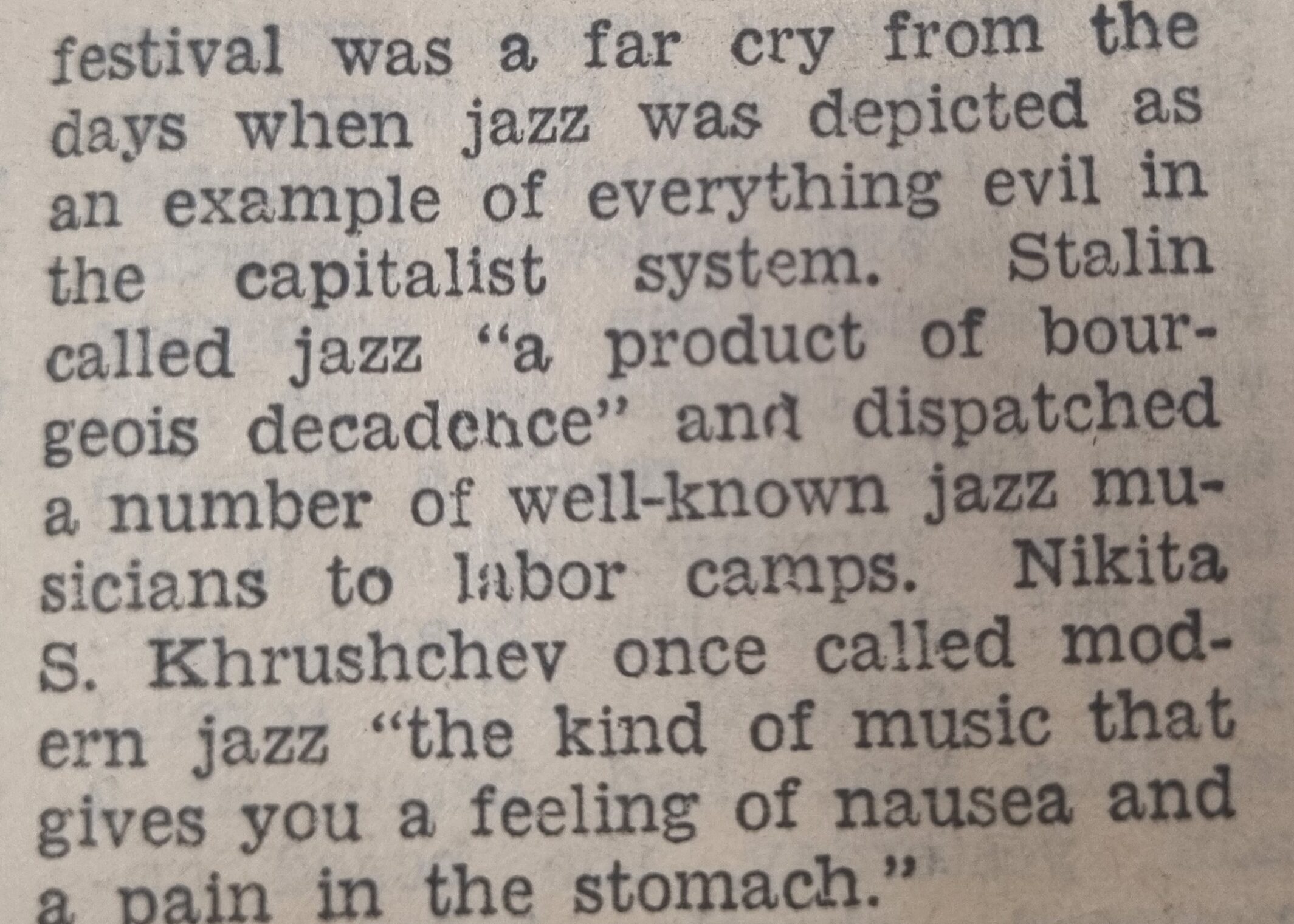
During the Stalinist decade, public performance was forbidden and state radio removed characteristic syncopation and improvisation. Cultural doctrine aligned with Socialist Realism and demanded ideologically “useful” art, a criterion incompatible with improvisatory practice and individual agency. Party discourse labeled jazz cosmopolitan and bourgeois and associated jazz enthusiasm with disloyalty to the socialist project. In this environment, the scene often retreated to private listening and informal sessions. Control mechanisms were extensive. A central censorship process and a Song Committee screened repertoire and required translation of foreign lyrics. Limited openings in the early Kádár period were short-lived, and semi-public jams in Budapest cafés were closed when they drew official attention. Cultural management consolidated into Tiltott–Tűrt–Támogatott (forbidden–tolerated–supported). Through the 1960s, jazz moved from forbidden to tolerated and only occasionally received active support. Permissions for larger events remained precarious, which restricted scale, continuity, and planning.
Institutional developments altered this position. In 1965 the Béla Bartók Conservatory established a jazz department under János Gonda. Incorporation into a state-sanctioned curriculum reclassified jazz as a legitimate discipline and aligned with the Kádár regime’s approach of domestication through controlled integration rather than continued prohibition.


Underground practices sustained a counter-public beneath formal structures. In the 1960s, listeners met in homes and cellars for clandestine sessions. These circles included students, intellectuals, and artists who associated the music with personal autonomy. Péter Szigeti, with whom I led a semi-structural interview, exemplifies this subculture. A polyglot scholar and club manager, Péter hosted weekly listening sessions in his Budapest apartment and amassed a catalogued collection of records and texts, often acquired through samizdat channels. His recollections document strategies used to navigate censorship. Musicians engaged in vendéglátózás (hospitality performance work), playing könnyűzene (light entertainment music) in restaurants and hotels while slipping modern improvisations into acceptable sets. Standards were translated into Hungarian and presented in operetta or musical-theatre formats to pass scrutiny. The Dália Club in Budapest functioned as a nightly site where, despite oversight, performers sustained a modern idiom. These practices constructed an alternative space for participation under constraint.
Western broadcasting reinforced this space. Voice of America’s Jazz Hour, hosted by Willis Conover, and programming on Radio Free Europe functioned as cultural instruments. For musicians with limited access to records and scores, Conover’s show operated as a curriculum. Broadcasting was selective. Programming emphasized swing, bebop, and other mainstream idioms that could be presented as disciplined, well structured, and broadly appealing. Free jazz, often linked to radical politics in the United States, received little exposure. The resulting filter produced a temporal lag in stylistic uptake. When free jazz did circulate, it carried ambiguous meanings: some treated it as a music rooted in racial struggle; others heard it as a universal language of freedom. This ambiguity shaped the Hungarian avant-garde, which developed distinctive features rather than replicating Western models. The most consequential example was the work of György Szabados, who fused free improvisation with Hungarian folk and classical materials.
Szabados’s trajectory clarifies how institutional and underground paths intersected. Born in 1939 and trained as a physician, he did not depend on music for income and did not work the commercial light-music circuit. This independence allowed him to pursue an aesthetic program without accommodation to market or bureaucracy. From the early 1960s he developed a synthesis of free improvisation with materials associated with Béla Bartók’s ethnomusicology: pentatonic melody, asymmetric rhythm, parlando rubato, and modal harmony drawn from Hungarian folk practices. The result treated jazz as a medium for historical and cultural articulation rather than imported entertainment. Through this frame, performance became a means to claim agency and to connect with collective memory within a regulated environment. During the 1960s, Szabados worked mainly in small experimental communities. International validation changed his domestic position. In 1972 his quintet won the Grand Prize in the free jazz category at the San Sebastián Jazz Festival, which pressured authorities to acknowledge him. In the late 1970s he founded the Kassák Workshop for Contemporary Music, an underground club and school that trained younger musicians, including Mihály Dresch, in intuitive, collective improvisation.

The contrast between avant-garde practice and state-endorsed culture of sixties clarifies the social function of jazz under communism. Party organizations favored forms that were controllable and communicative for propaganda—mass choirs, national folk ensembles, and later sanitized popular song. Free jazz carried no explicit socialist message and its abstract improvisation conflicted with Socialist Realism’s demand for didactic content. State ensembles operated within bureaucratic frameworks with guaranteed broadcast time, funding, and travel, in exchange for compliance. Avant-garde jazz worked in small clubs, aficionados’ circles, and occasional festival slots.
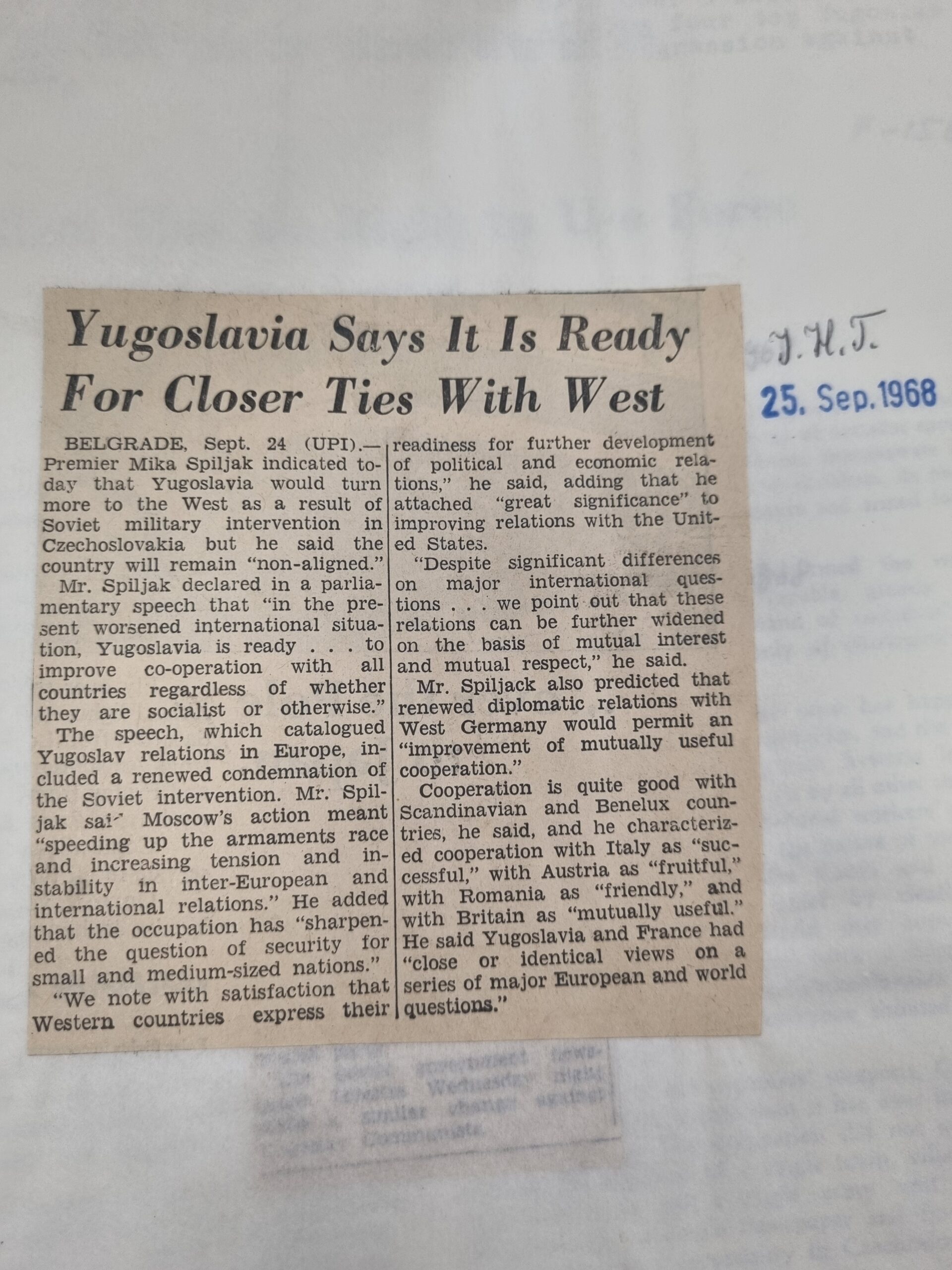
Yugoslavia offers a systematic counterpoint to Hungary’s Cold War jazz history. After the 1948 split with the Soviet bloc, Yugoslavia pursued a non-aligned socialist path under Josip Broz Tito and did not impose blanket prohibitions on Western cultural forms. By the late 1950s and 1960s, the country welcomed American and Western European culture as a marker of non-alignment. Travel abroad was more accessible, Western records circulated with fewer restrictions, and jazz operated in public rather than in clandestine spaces. Already in the mid-1950s Yugoslav jazz musicians recorded and performed openly. The Bled Jazz Festival, launched in 1960 and soon moved to Ljubljana, became Eastern Europe’s first and longest-running international jazz festival. State radio and television in Belgrade and Zagreb broadcast jazz programs. The different regulatory climate altered jazz’s social function. In Yugoslavia, jazz signaled cosmopolitan modernity within an officially tolerated cultural sphere.
The historical trajectory of jazz in the former Yugoslavia, when examined through the lens of cultural reception, institutional development, and artistic innovation, reveals a pattern markedly distinct from the avant-garde movements seen in other Eastern European contexts such as Hungary, Poland, and Czechoslovakia. In Yugoslavia, jazz never evolved into a fully embedded artistic form within the national cultural canon. Rather than developing as a space for radical artistic experimentation or political resistance, jazz in the Yugoslav context remained predominantly an interpretative practice, either as an emulation of American mainstream jazz or as a form of ethno-jazz that attempted, with limited success, to localize the genre through the integration of Balkan musical elements. Accessibility of jazz did not result in the formation of an avant-garde jazz scene. Instead, Yugoslav jazz was institutionalized through state-supported big bands that promoted swing, bebop, and hard bop as the definitive styles.

In contrast, avant-garde jazz in Hungary developed within a context of repression and creative constriction. This underground jazz culture in Hungary operated in opposition to institutionalized forms and aligned itself with broader dissident movements. No such parallel can be found in Yugoslavia, where the political system, despite being non-aligned, lacked the polarizing cultural constraints that often catalyzed subversive artistic movements elsewhere in the Eastern bloc.
Moreover, the Yugoslav jazz discourse was shaped by a semiperipheral cultural logic, as described by Marina Blagojević Hughson. The region oscillated between Western aspiration and a defensive localism, producing a jazz identity that was neither fully innovative nor entirely derivative. Ethno-jazz emerged as a hybrid form, yet it seldom transcended the realm of stylistic fusion to achieve the status of radical artistic innovation. The relative absence of political urgency, coupled with the persistent valorization of American jazz as an ideal, contributed to a jazz culture in Yugoslavia that was more about admiration and adaptation than critique or reinvention.
The comparative perspective clarifies cross-border flows. For Hungarian musicians, Yugoslavia’s permissive environment provided access to broadcasts, records, and occasional performance opportunities. Yugoslav stations could be received in southern Hungary, offering material that was scarce under Hungarian controls. Some Hungarian musicians traveled through Yugoslavia to obtain records or to perform. Hungary did liberalize in the 1970s and 1980s, but it did not reach the breadth of Yugoslavia’s 1960s openness.
The legacy of these trajectories is visible in how each state is now studied. In Hungary, the shift from stigmatized “cosmopolitan noise” to recognized cultural heritage is traced through scholarship and archives that document censorship, supervised legalization, and underground practices. Materials from Radio Free Europe/Radio Liberty and Hungarian state security files illuminate state strategies and counter-strategies, as well as the role of Western broadcasts in shaping listening habits. The Yugoslav case anchors a regional comparison that links ideological latitude to festival infrastructures, media exposure, and record-industry practices.

In conclusion, the divergent paths of jazz in Hungary and Yugoslavia highlight how differing socio-political and cultural frameworks shaped the possibilities for artistic innovation. In Hungary, avant-garde jazz developed primarily as an artistic pursuit driven by a desire for formal experimentation and new modes of expression; while it carried political implications, its subversiveness was largely shaped by the Party and institutional framing, rather than stemming from overt resistance by the artists themselves. In contrast, Yugoslavia’s longstanding classification of jazz as a form of light entertainment limited its cultural legitimacy, preventing the emergence of an avant-garde idiom and reinforcing a jazz rooted in imitation of American models or ethno-fusion, with little engagement in the genre’s potential as a site of aesthetic rupture or critical discourse.
