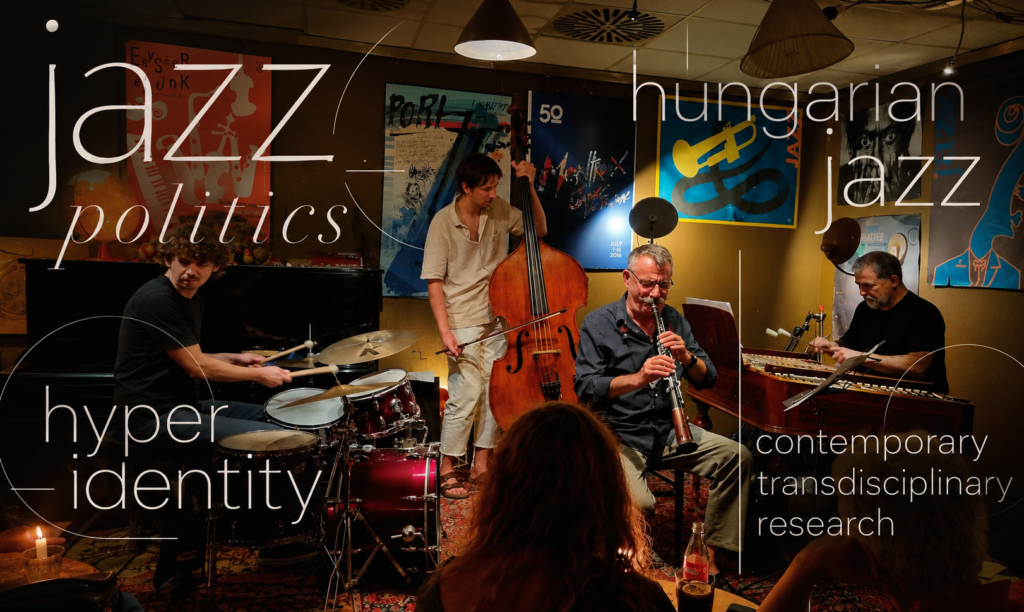
Jazz, Politics, and Decolonizing Research: Hyper-Identity and Authenticity in Hungarian Avant-garde Legacies and Serbian Parallels
Research Affiliate, Institute for Advanced Study, Central European University (IAS CEU), Budapest
This transdisciplinary artistic research project explores how the historical legacies of Hungarian avant-garde jazz, shaped by Cold War censorship, political resistance, and cultural negotiation, continue to influence contemporary musical practices, artistic identities, and understandings of authenticity in Hungary and Serbia. Rather than focusing solely on the historical development of avant-garde jazz, the project examineshow these legacies are interpreted, performed, transformed, and negotiated by musicians today—how ideas of artistic freedom, national identity, and cultural resistance, formed under specific political conditions in the 1960s and 1970s, acquire new meanings within contemporary social, political, and musical contexts.
Drawing parallels between Hungarian avant-garde traditions and the different historical trajectories of jazz in former Yugoslavia, the research investigates how inherited musical languages, collective practices, and cultural narratives continue to shape contemporary improvisational scenes. Combining archival research, ethnography, social anthropology, musicological analysis, and artistic practice, it explores the relationship between historical memory, cultural heritage, musical performativity, and identity formation. From a transdisciplinary and decolonizing perspective, the project approaches improvisation and collaborative music-making not only as artistic expressions but also as forms of social interaction, cultural negotiation, and knowledge production.
As part of the project, I am developing a series of research–music labs and transdisciplinary workshops bringing together Hungarian and Serbian musicians, artists, and academic researchers. Through collaborative improvisation, artistic experimentation, discussions, and presentations, these encounters will explore how historical avant-garde legacies are reinterpreted through contemporary creative practice, opening new possibilities for cross-border dialogue and collective knowledge production.
More coming soon!